On Sourcing Marble in Italy
Why the quarry matters more than the showroom — and how we navigate both.
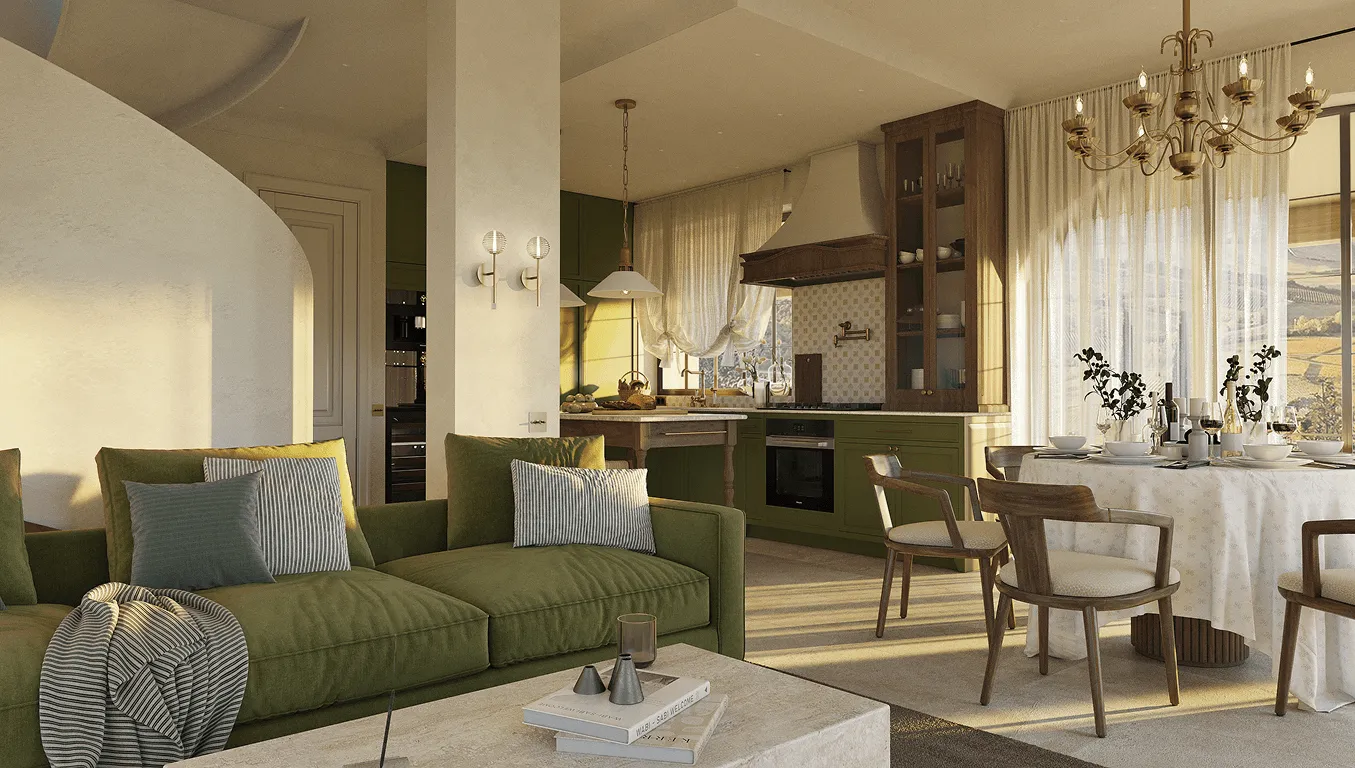
When a client asks for marble, they usually mean a surface. What they are actually choosing is a geological event, a quarry face, a block number, a slab position, and the particular angle at which light will fall on a kitchen island at eight in the morning.
The showroom is where you see a sample. The quarry is where you understand what you are buying.
The problem with samples
A 30×30 cm sample from a distributor’s warehouse tells you the color range and the approximate movement of a stone. It tells you very little about how that stone will read at full slab scale, how it will vein across a book-matched panel, or whether the batch available at the time of your fabrication will match what you approved six months earlier.
We have seen projects — beautifully designed, carefully specified — undone by a marble substitution that happened because no one checked the quarry inventory before signing off on the design.
The block number is not a detail. It is the specification.
How we source
For any marble application larger than a splashback, our process is the same: we go to the quarry, or we go to a stonecutter who we trust to have eyes there for us.
This is not romantic — it is logistical. Italy has the deepest marble infrastructure in the world. Carrara, Calacatta, Statuario, Arabescato, Paonazzo — each name covers dozens of sub-varieties, each quarry face produces different material, and the difference between a €180/m² slab and a €900/m² slab can be invisible in a photograph and obvious in a room.
We maintain relationships with fabricators in Carrara, Verona, and Sicily who will hold blocks for us, provide full-slab photography before cutting, and guarantee batch consistency across a project. This is not a service most distributors offer. It is the only way to specify stone responsibly at the level our clients expect.
What this means for your project
If you are specifying marble for a project — whether a residential kitchen, a hotel lobby, or a private spa — the conversation needs to happen early. Lead times for quarried stone, particularly for rarer varieties, run from eight to twenty weeks. Book-matched panels require adjacent slab selection that must happen before fabrication begins.
We treat stone sourcing as a design decision, not a procurement task. The two are not the same thing. It is the same discipline we bring to FF&E procurement as a whole: the specification is only as good as the sourcing behind it.
For a worked example, the Casa Quiete villa on Lake Orta turned on a made-to-order Calacatta island — confirmed at the block before the kitchen was finalized.
Related: Casa Quiete, Lake Orta · FF&E Procurement · Boffi