Alessi
Alessi turns everyday kitchen objects into authored design. Founded by the Alessi family in 1921 in Crusinallo, in the Italian Alps north of Lake Orta, the company calls itself a 'design factory' — it commissions architects and designers rather than employing in-house stylists, and has put more than 1,400 objects into production with over 900 designers. The result is some of the most recognizable design icons in the home: Philippe Starck's Juicy Salif squeezer, Michael Graves's 9093 kettle with its red bird whistle, Richard Sapper's 9090 espresso maker — the first Alessi piece to enter MoMA's permanent collection. Made mostly in mirror-polished 18/10 stainless steel and polished aluminum, each is a working object and a collectible at once. Via della Seta sources Alessi for residential and hospitality projects across the United States — handling specification, freight, customs and delivery under one contract.
Curated by Chiara Borgoli, founder, Via della Seta
Request a quote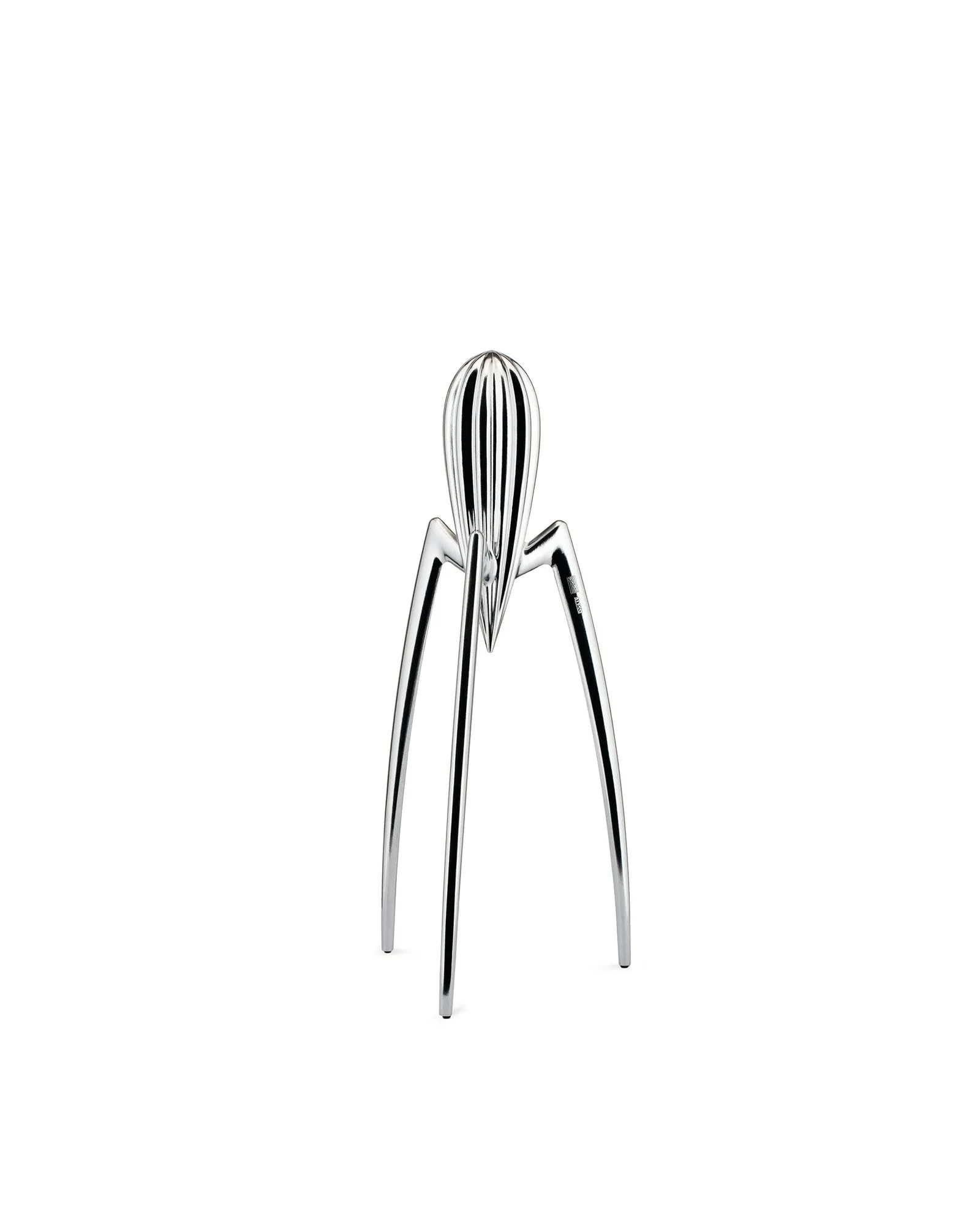
Why specify Alessi for an interior project
Alessi is the choice when a kitchen or table needs objects with authorship, not anonymous accessories. Because each piece carries a designer's name — Starck, Graves, Sapper, Mendini, Sottsass — the kettle, the squeezer or the tray reads as a deliberate design decision that matches the rest of a considered interior. For a project, that turns functional items into the small sculptural moments a client remembers, on the counter and on the table.
It is also a remarkably broad range from one house. Espresso and moka makers, kettles, condiment sets, trays and baskets, cookware and the famous one-off objects all share the same material quality — mirror-polished steel and aluminum, with bright resin accents — so a whole kitchen can be outfitted in a coherent design language rather than assembled from unrelated brands. The catalog runs from accessible icons to limited authored editions.
Via della Seta sources Alessi. We work from the spec — pieces, finishes and quantities for a residence, a holiday home or a hospitality fit-out — manage freight and US customs clearance, and consolidate the Alessi order with the rest of the specification (kitchens, tableware, lighting) under one contract and one timeline.
Best Alessi collections by use case
Coffee & espresso
9090, La Conica, La Cupola, Pulcina
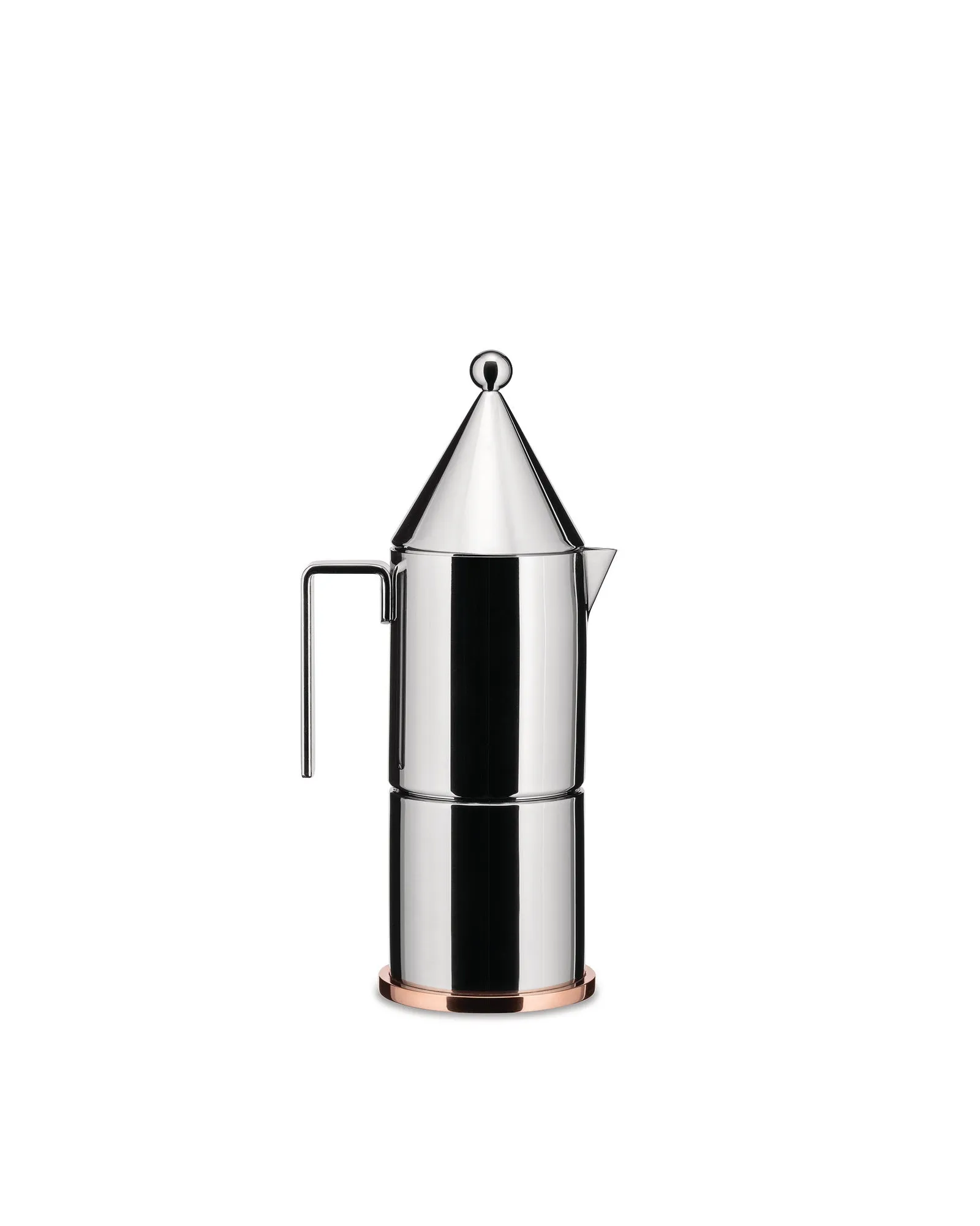
Stovetop espresso and moka makers, from Sapper's MoMA-collected 9090 to Aldo Rossi's conical La Conica and the fluted La Cupola — coffee as authored design.
Kettles
9091, 9093
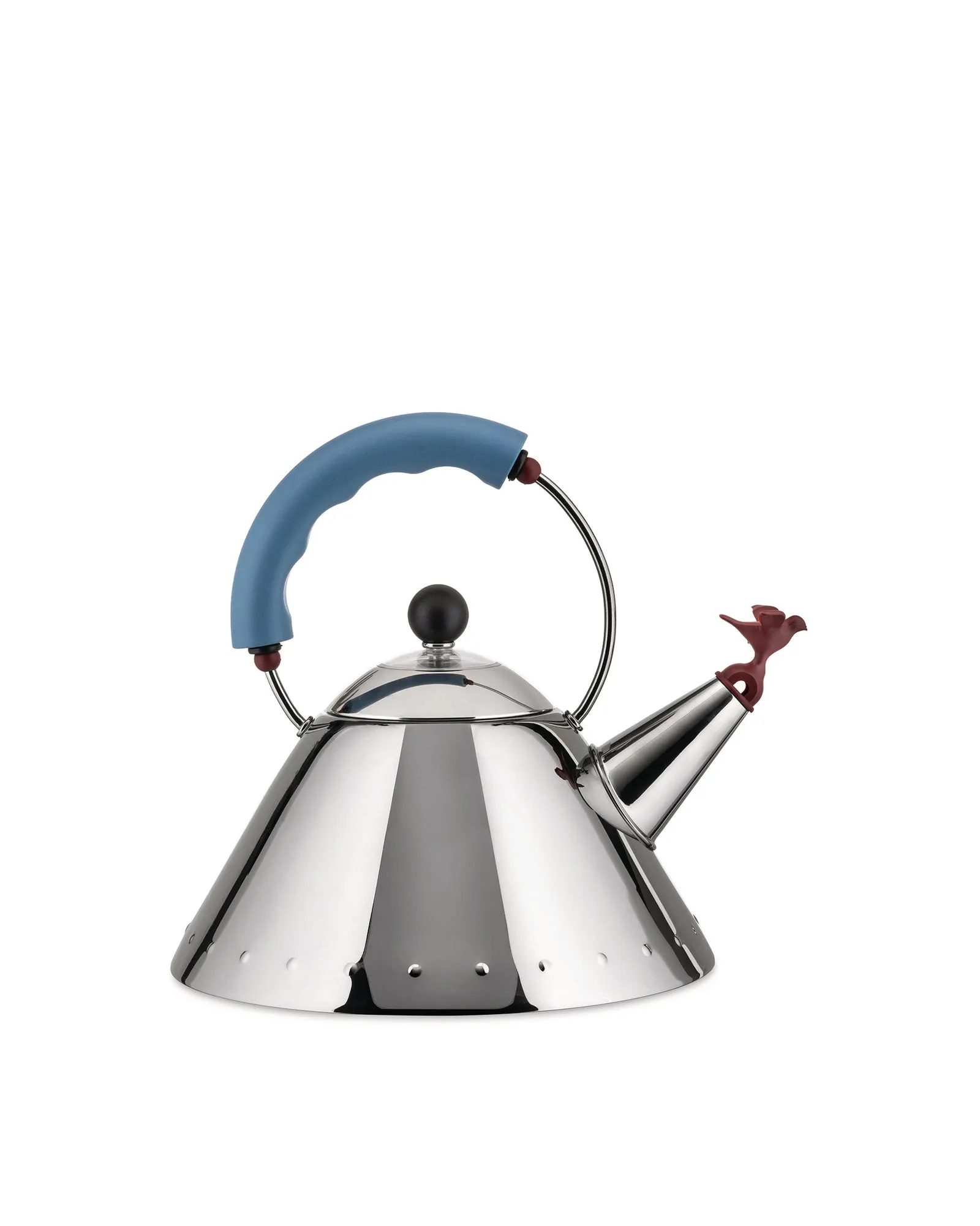
Sapper's 9091 with its two-tone brass whistle and Graves's best-selling 9093 with the little red bird on the spout — the design kettle that started a genre.
Design icons & objects
Juicy Salif, Anna G, Girotondo
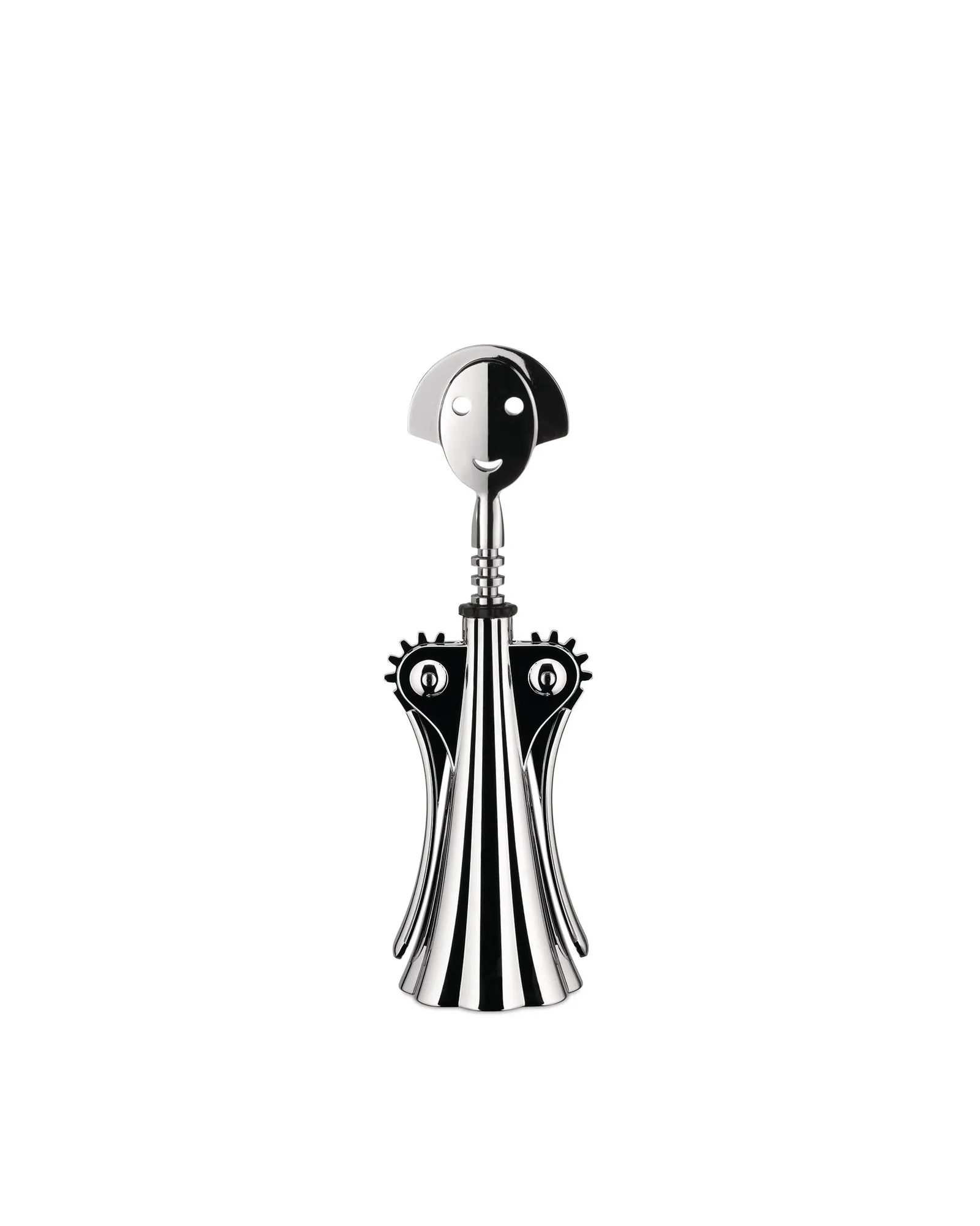
The sculptural one-offs — Starck's three-legged squeezer, Mendini's smiling Anna G corkscrew, the King-Kong Girotondo line of pierced figures — collectibles that happen to be useful.
Table & cookware
5070, Bombé, Mami, 826
Sottsass's restaurant-standard cruet set, the Art-Deco Bombé jug, Giovannoni's rounded Mami pots and the classic 826 wire basket — the working table and stove.
Collections
9093 Kettle
Michael Graves's 1985 kettle — a conical mirror-stainless body with a curved pale-blue molded handle and a small red bird whistle perched on the spout, which chirps as the water boils. The piece that made the design kettle a genre, and one of Alessi's best-sellers.
La Conica
Aldo Rossi's espresso maker — a tall conical polished-stainless body on a flared circular base in a warm copper tone, topped with a small ball finial. Architecture in miniature: Rossi brought his post-modern formal language to the coffee table, and La Conica became one of Alessi's defining designs of the 1980s.
Anna G
Alessandro Mendini's corkscrew, shaped as a smiling woman in a pleated 'dress' — a tall chromed figure whose raised arms work as the levers that draw the cork. Playful, instantly recognizable, and the start of a whole family of Anna and Alessandro characters.
Girotondo
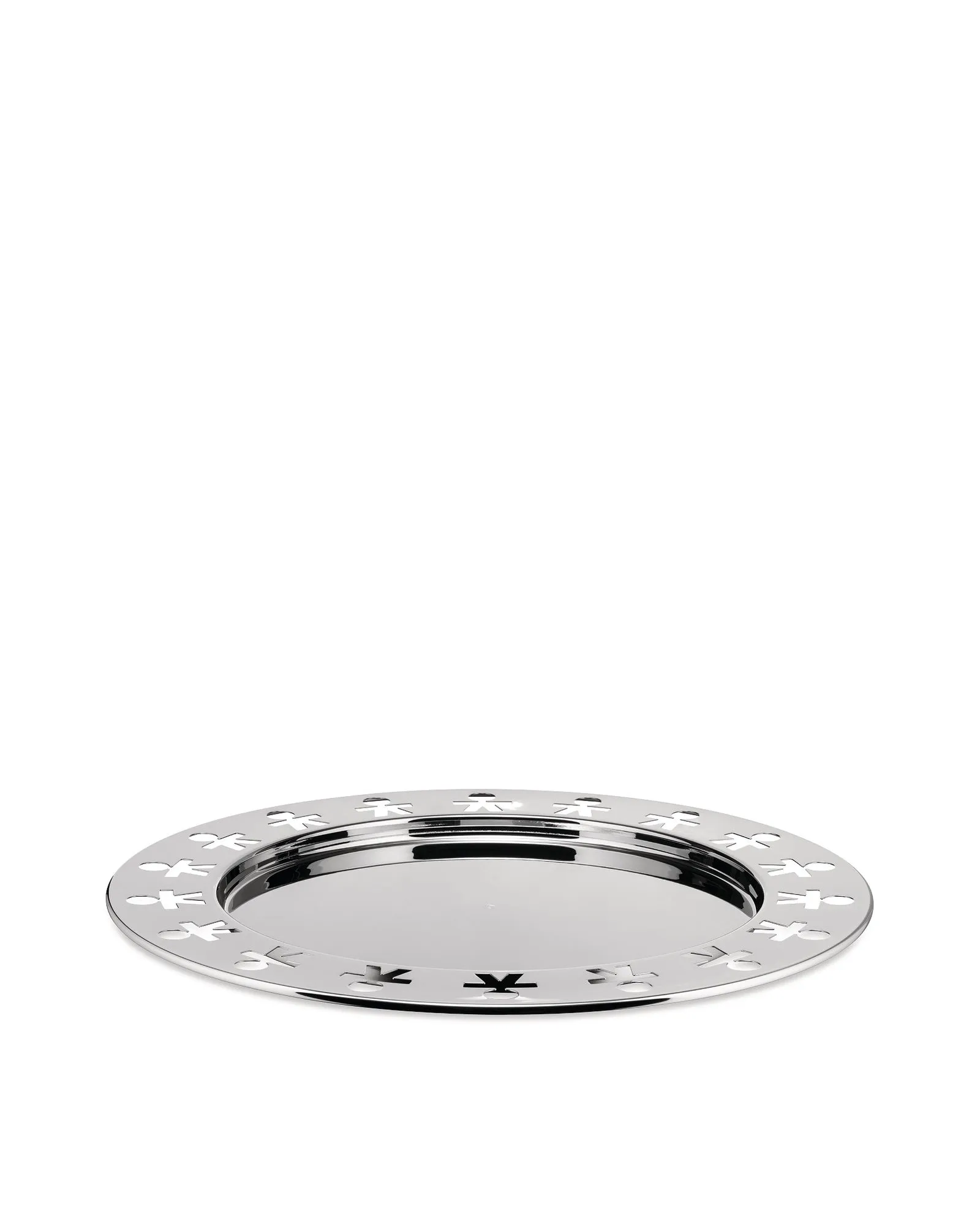
The King-Kong (Giovannoni and Venturini) line — here the round mirror-polished stainless tray ringed with the signature cut-out 'paper-doll' little figures pierced around the rim. The motif that turned a serving tray into one of Alessi's most-loved everyday icons.
Specification & project planning
Lead time
Core icons generally in stock; allow longer for limited editions, special finishes and large hospitality quantities, confirmed at quotation
Authorship & editions
Each piece is a named design; some run as numbered limited editions or annual pieces. We confirm current availability and any edition status when preparing a quote.
Pricing tier
Design-author premium — above generic kitchenware, from accessible icons to collectible limited editions. Priced per piece and finish.
Trade pricing
Available to verified designers, architects and hospitality buyers. Send your object list and quantities for a project-specific quote.
Alessi vs Seletti, Rosenthal, Georg Jensen
| Alessi | Seletti | Rosenthal | Georg Jensen | |
|---|---|---|---|---|
| Origin | Italy (Crusinallo, 1921) | Italy (Cicognara, 1964) | Germany (Selb, 1879) | Denmark (Copenhagen, 1904) |
| Signature | Authored design objects & kitchenware | Pop & surrealist homeware | Design-led porcelain | Silver & steel homeware |
| Best known for | Juicy Salif, 9093 kettle | Monkey Lamp, TOILETPAPER | Versace line, Sanssouci | Hollowware, cutlery |
| Materials | Polished steel, aluminum, resin | Resin, porcelain, glass | Porcelain, bone china, glass | Sterling silver, stainless |
| Best for | Collectible design for the kitchen | Statement pieces & gifting | Fine dining & gifting | Heirloom metalware |
Care & maintenance
Polished steel & aluminum
Hand-wash mirror-polished steel and aluminum pieces in warm soapy water and dry immediately to avoid water spots; avoid abrasive pads that scratch the mirror finish. Some aluminum icons, such as Juicy Salif, are intended primarily as design objects — check each piece's use guidance.
Resin & colored accents
Wipe molded handles, knobs and whistles with a soft damp cloth; keep them away from direct heat sources beyond their intended use. Coffee makers and kettles should be used and cleaned per the product instructions.
Display & editions
Limited and numbered editions are best kept with their certificates and original boxes; clean only as the material allows to preserve both function and collectible value.
Frequently Asked Questions
What is Alessi?
Alessi is an Italian design house — it calls itself a 'design factory' — founded in 1921 in Crusinallo, Italy. Rather than employ in-house stylists, it commissions architects and designers, and has produced more than 1,400 objects with over 900 designers. It is best known for design icons in kitchen and tableware: kettles, espresso makers, the Juicy Salif squeezer, trays, corkscrews and condiment sets in polished steel and aluminum.
Can I buy Alessi in the United States through Via della Seta?
Yes. Via della Seta sources Alessi for residential and hospitality projects across the United States — including luxury residences in California, Florida, New York and Texas, and hospitality interiors nationwide. We handle specification, the order, freight, US customs clearance and delivery, and can consolidate Alessi with the rest of your kitchen, tableware and lighting specification.
Are Alessi pieces functional or decorative?
Both. Most Alessi objects are fully functional — the 9090 and 9093 make coffee and boil water, the cruet sets and trays are used daily — but they are designed as collectible objects, so they double as sculptural pieces on the counter and table. A few, like the Juicy Salif, are loved more as design icons than as everyday tools; we flag the intended use of each piece.
Who designs Alessi products?
Some of the most significant names in modern design. Richard Sapper (9090, 9091), Michael Graves (9093), Philippe Starck (Juicy Salif), Alessandro Mendini (Anna G), Ettore Sottsass (5070 cruet set), Aldo Rossi (La Conica, La Cupola) and Stefano Giovannoni (Mami, Girotondo) have all authored Alessi pieces — which is why each object carries a designer's name and design history.
What is the Juicy Salif?
The Juicy Salif is Philippe Starck's citrus squeezer for Alessi — a polished aluminum form with a bulbous ribbed head on three tall, tapering legs that resembles a spider or squid. It is one of the most recognizable design objects of the late twentieth century and is collected as a sculptural icon as much as a kitchen tool.
What are Alessi pieces made of?
Mostly mirror-polished 18/10 stainless steel — the kettles, espresso makers, trays, baskets and jugs — and polished or die-cast aluminum, as in the Juicy Salif. Colored handles, knobs and whistles are molded thermoplastic resin, and some pieces combine glass with steel or silicone, as in the Sottsass cruet set. We confirm materials and finishes for each item at quotation.
See Also
Seletti
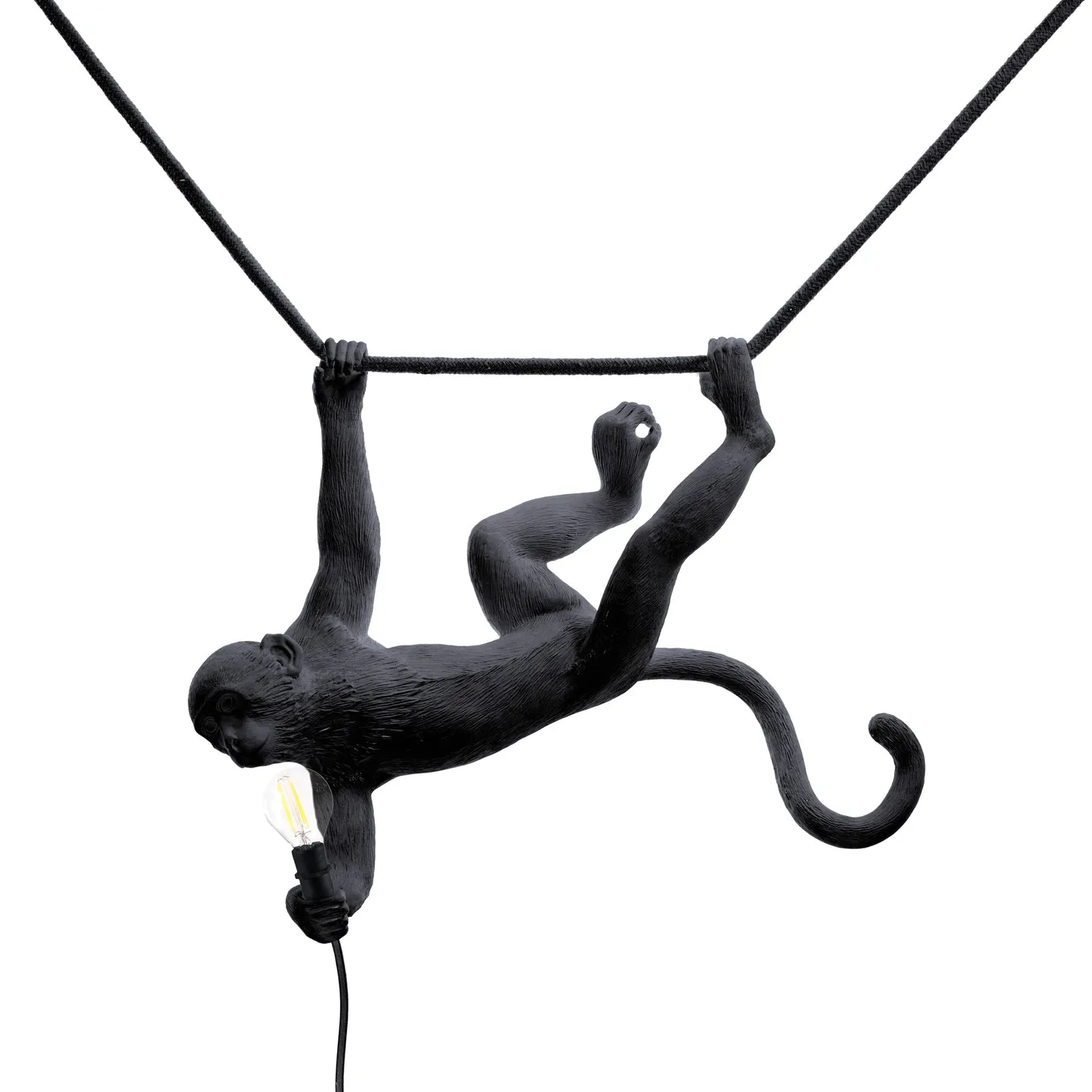
Irreverent Italian design — pop and surrealist lighting, tableware and objects with a sense of humor.
Rosenthal
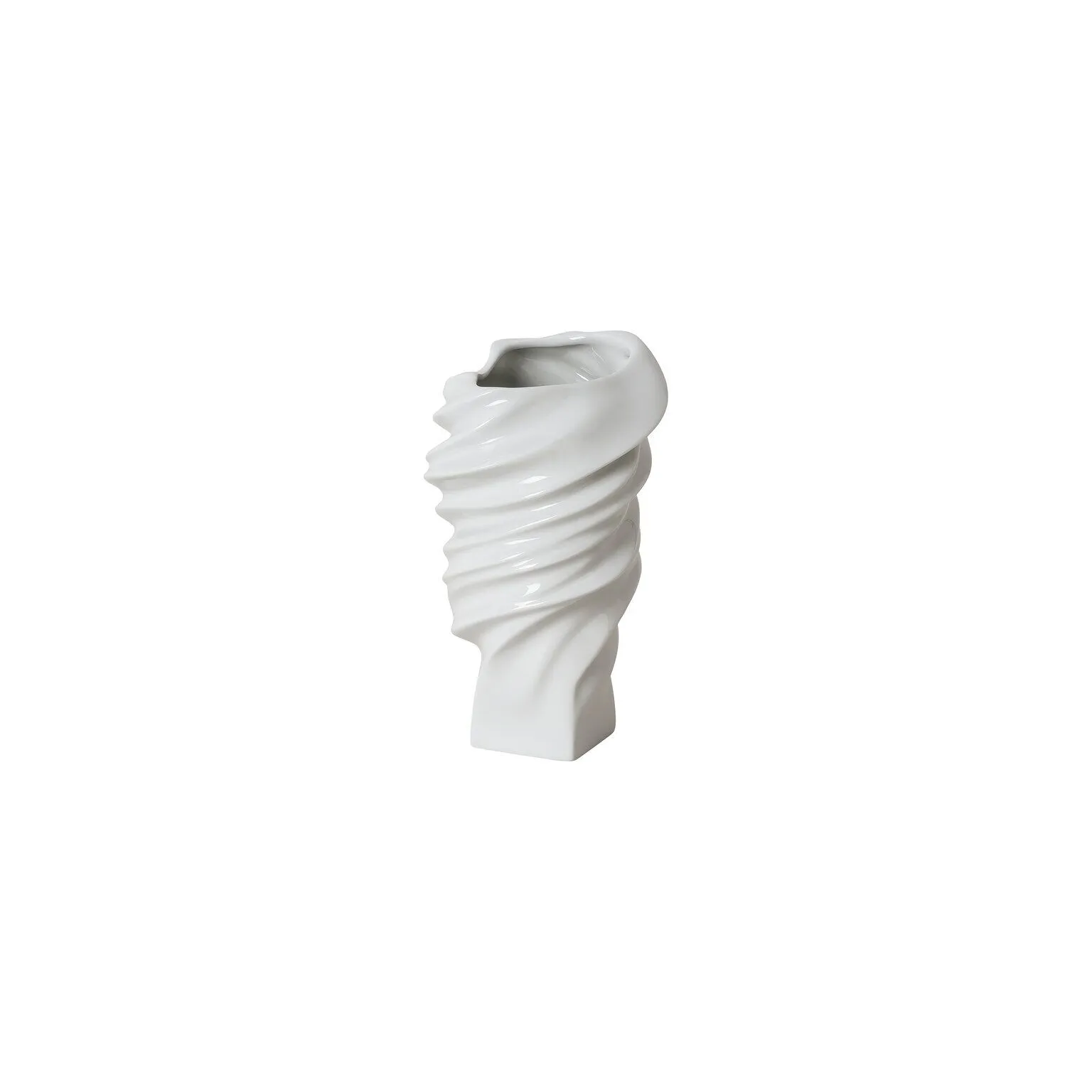
German design-led porcelain since 1879 — heritage dining, studio-line vases and the Versace line.
Catellani & Smith
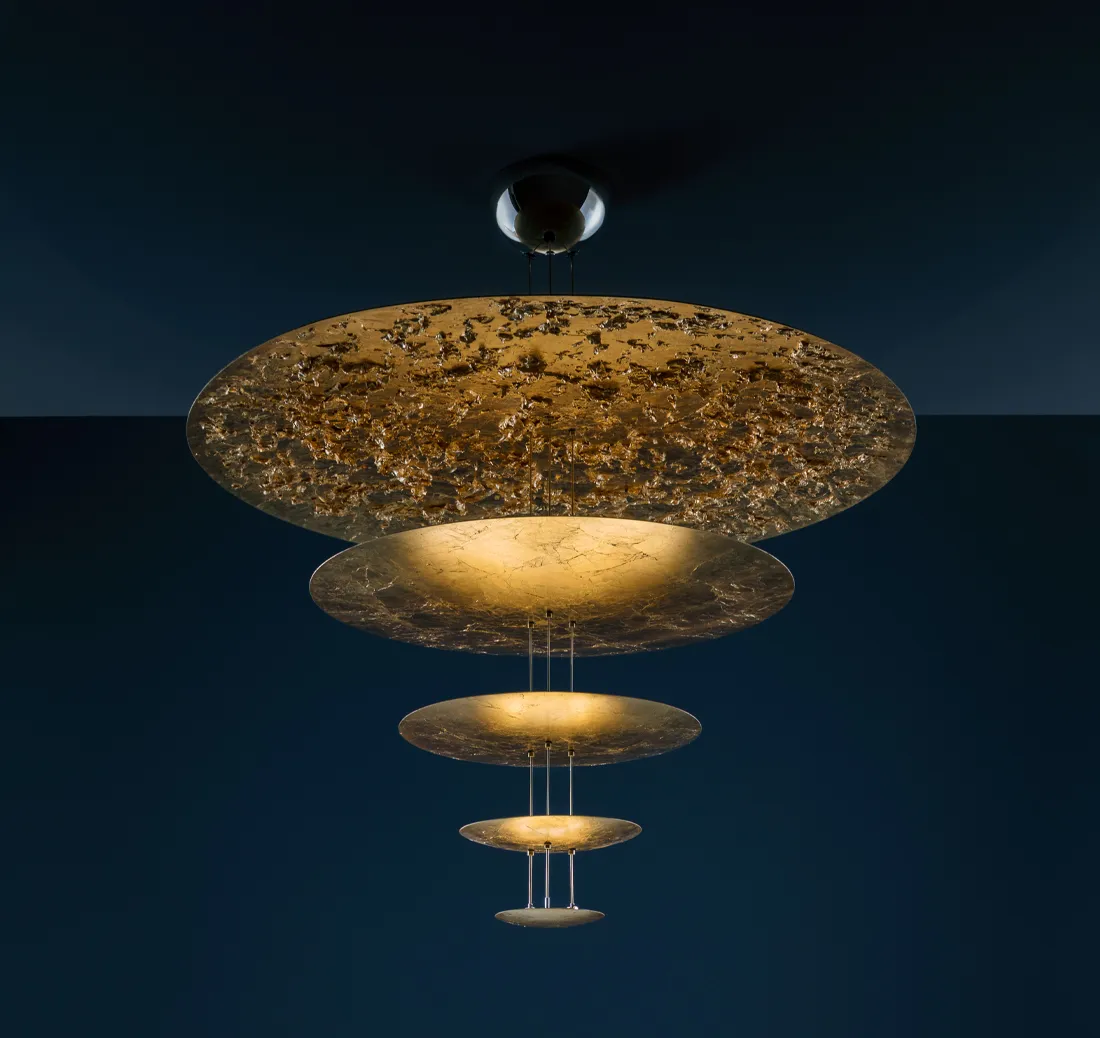
Sculptural Italian lighting — handcrafted brass, gold-leaf and LED pieces that read as light art.
Boffi
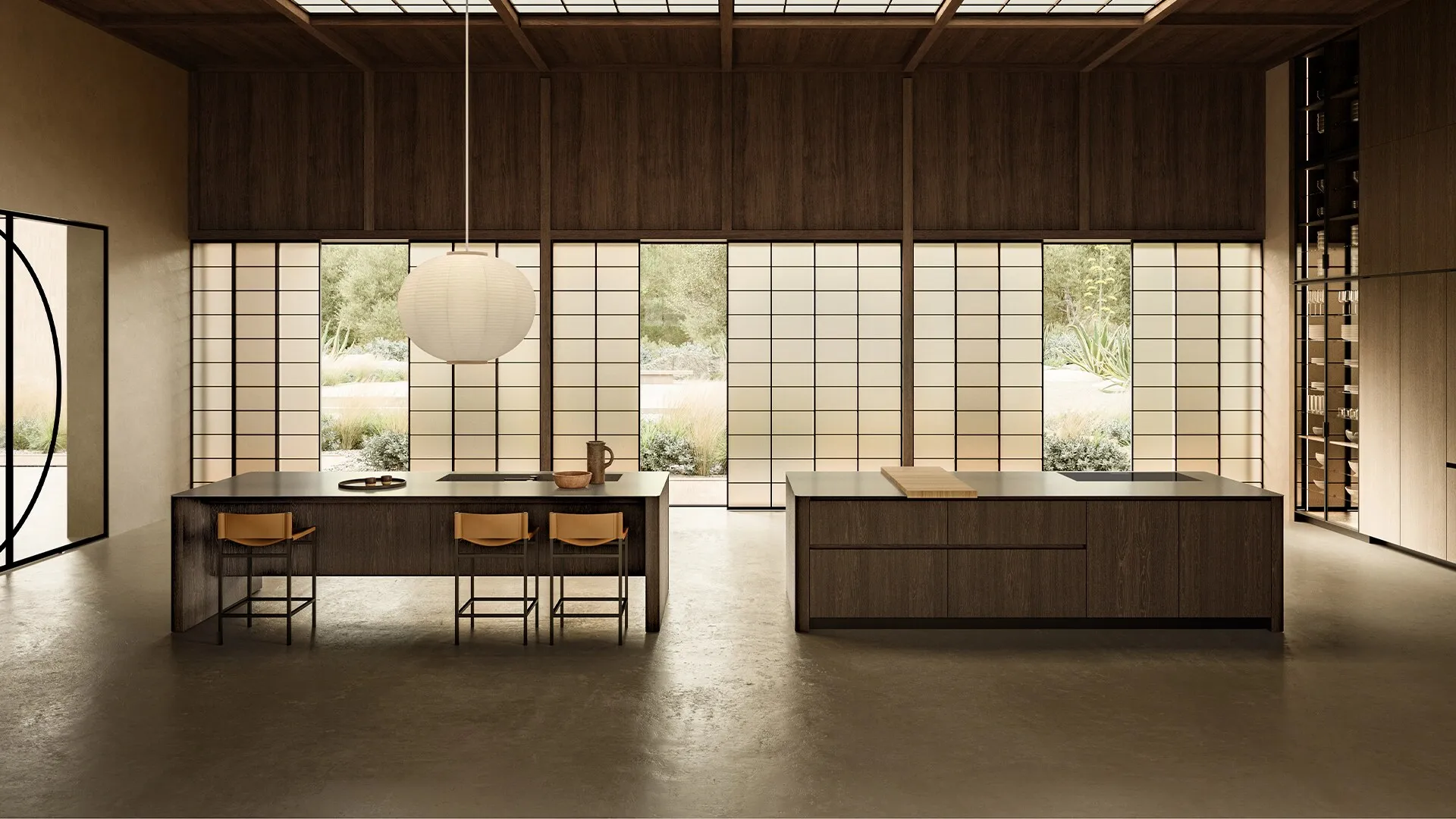
Italian luxury kitchens and bathrooms — minimal, architectural systems for the heart of the home.
Let's talk
Request a quote or partnership
Thank you — we'll be in touch shortly.
Something went wrong. Please email info@viadellaseta.design.